The Postgrad Reps are TSG’s link to MSc and PhD students in structural geology community. They offer ideas and initiatives that would make TSG attractive or supportive to postgrads, and help promoting TSG to postgrad audiences. As a day-to-day task, they are in charge of our media presence, managing this website and social media accounts (Twitter, LinkedIn & Facebook).
Hannah Othen (since January 2025)
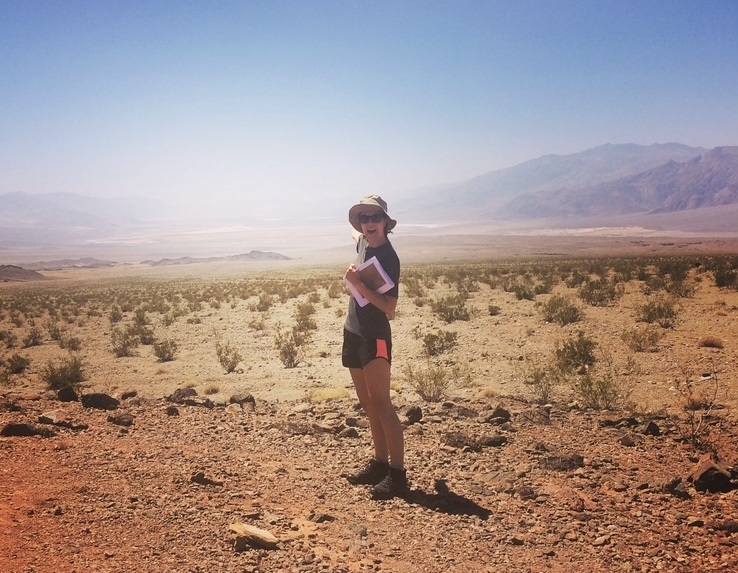
Hannah is a PhD researcher within the earth resources sector of iCRAG based at University College Dublin. She graduated from Keele University with her Geoscience BSc. and an MSc. in Geoscience research based on near surface geophysics. In 2022 Hannah switched areas and joined iCRAG under the supervision of Dr. Koen Torremans to start her PhD project based on understanding the tectono-stratigraphic evolution of the basin bounding fault structures in the Irish Mississippian carbonate rocks. Hannah’s project uses large datasets including geophysical and seismic data, borehole logs, hyperspectral data and core samples to investigate and model the structural geology and stratigraphy within the basin margins across the Irish Midlands. This will be linked to finding suitable carbonate host rocks for earth resources including geothermal energy and mineral exploration. Alongside her geological interests Hannah also enjoys playing and watching football.
Saoirse Coveney (since January 2026)
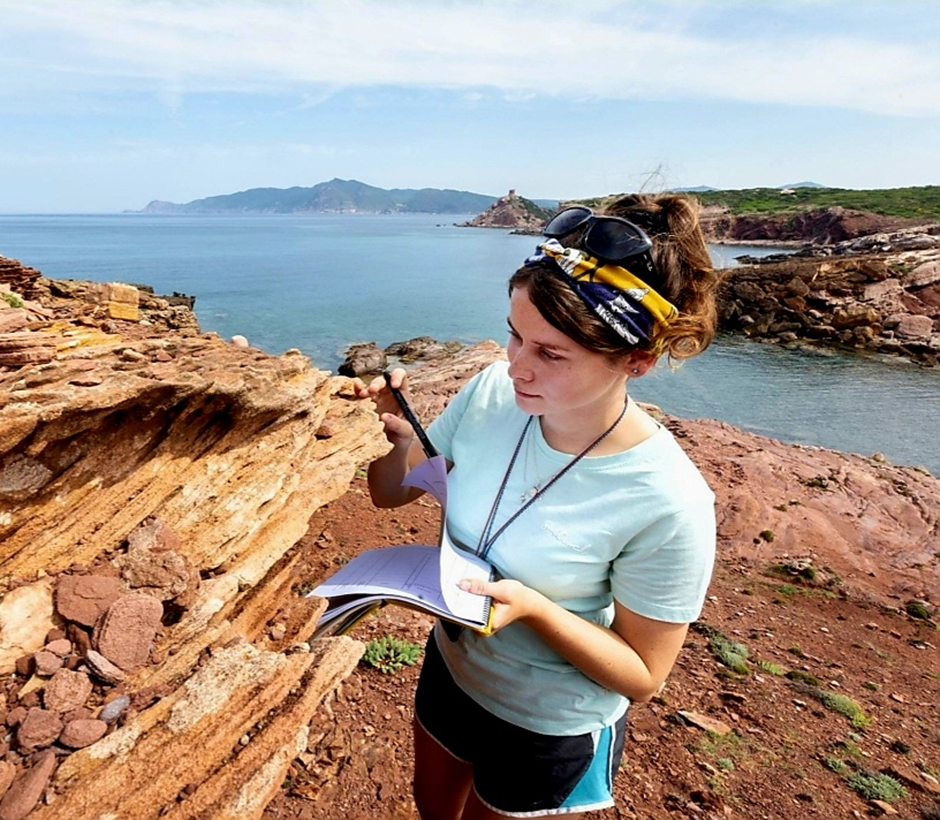
Saoirse is a PhD student in the Landscapes and Basins Research Group within the Department of Earth Science and Engineering at Imperial College London, where she previously graduated with an MSci in Geology. Her master’s project focused on integrating high-frequency 2D seismic reflection datasets with core data to investigate the first 10 ka of normal fault growth over millennial timescales. Saoirse’s PhD research aims to understand the continuity, spatiotemporal evolution, and seismic potential of active normal fault zones in the Southern Gulf of Evia rift, Central Greece. Her work combines field mapping, tectonic geomorphology, seismic reflection data, and geodetic data to reconcile landscape analysis of fault growth and interaction with subsurface measures of fault behaviour and evolution.


Follow Us!